▪Board & C-level dashboards with actionable risk, security, compliance, and resilience metrics.
▪ Assign clear ownership for risks, controls, assets, and remediation.
▪Align cybersecurity controls and initiatives with enterprise strategy and business objectives.
▪ Centralize organizational risk posture, controls, compliance, and remediation status.
▪ Track security posture through dashboards, KRIs, and trends.
▪ Improve alignment between cybersecurity teams, asset owners, risk functions, and leadership.
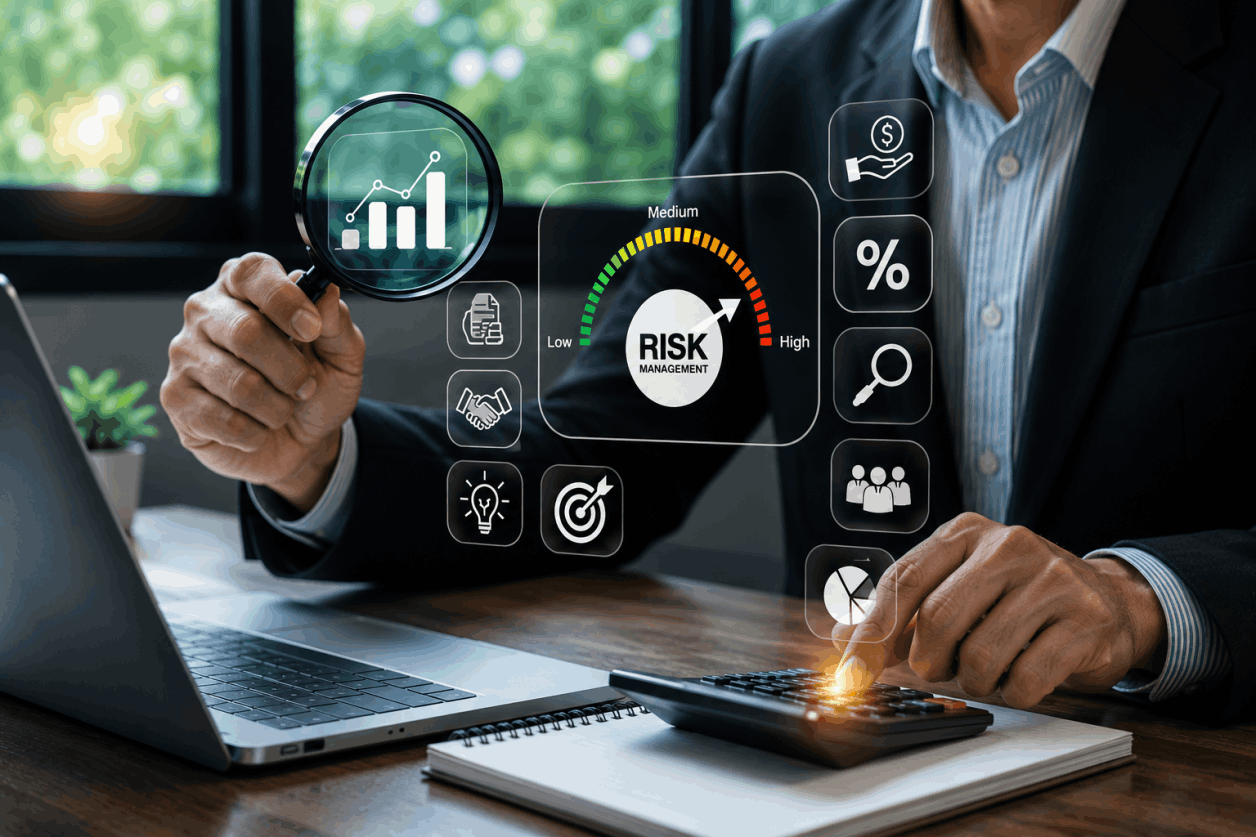
▪ Monitor 50+ KRIs covering cybersecurity, ICS/OT, assets, vulnerabilities, identity, network, and compliance.
▪ Context-aware risk scoring based on severity, asset criticality, exposure, business impact, and controls.
▪ Dynamically prioritize risks and vulnerabilities based on operational and business impact.
▪ Map technical vulnerabilities and control gaps directly to assets, business risks, and the Risk Register.
▪ Define, assign, track, and validate Risk Treatment Plan.
▪ Continuously evaluate control effectiveness to detect security drift and unmitigated exposure.
▪ Map assets, processes, controls, and evidence to global/local regulations, standards, and internal policies.
▪ Centralize Policies & Procedures, control requirements, ownership, and evidence.
▪ Continuously assess control effectiveness and identify compliance gaps.
▪ Validate security controls continuously to prevent regulatory drift.
▪ Compliance dashboards showing posture, gaps, and remediation status.
▪ Generate reports for ISO, IEC, NIST, CIS, HIPAA, OTCC, DESC-ICS, NCA ECC, PDPL, SAMA, NESA, NIAF, NIA, QCSF, and other applicable frameworks.
▪ Approximately 2 million vulnerability checks across ICS/OT and IT assets, hardware, firmware, and software.
▪ Track OEM-approved patches and patch availability for affected assets.
▪ Assess vulnerability severity, risk scores, asset criticality, exposure, exploitability, and age.
▪ Prioritize vulnerabilities and patches based on business and operational risk.
▪ Provide actionable remediation, mitigation, and patching recommendations.
▪ Validate remediation and patch effectiveness by reassessing affected assets.
▪ Continuously detect new, recurring, and re-emerging vulnerabilities and track remediation trends.
▪ Continuously discover and map Hardware, ICS/OT, Firmware, Software, Endpoint, Network, and Identity assets.
▪ Automatically classify assets according to criticality and business importance.
▪ Identify unknown, unmanaged, and unmonitored assets to eliminate attack-surface blind spots.
▪ Assign accountable owners to every asset.
▪ Track asset location across sites, zones, segments, and networks.
▪ Monitor asset status, configuration, ownership, and lifecycle.
▪ Discover and inventory PLCs/controllers, HMIs, SCADA, OWS, EWS, RTUs, and other ICS/OT assets.
▪ Assess industrial assets for vulnerabilities, configuration weaknesses, and firmware risks.
▪ Track firmware, configuration, and program changes.
▪ Audit changes that could introduce cybersecurity or operational risks.
▪ Support air-gapped and isolated OT networks.
▪ Support standalone industrial systems.
▪ Centralized governance across legacy and modern industrial environments.
▪ Maintain comprehensive IT and ICS hardware inventory.
▪ Automatically discover hardware devices and components.
▪ Detect unauthorized, rogue, unknown, and unmanaged hardware.
▪ Identify unmonitored and unassessed assets to eliminate blind spots.
▪ Support air-gapped, isolated, and standalone environments.
▪ Classify hardware by criticality and assign owners.
▪ Capture manufacturer, model, firmware, network cards, processor, memory, and storage.
▪ Continuously discover and inventory clients, workstations, servers, and non-domain-joined systems.
▪ Track operating system, patch level, configurations, services, and processes.
▪ Validate AV/EDR status, updates, firewall, and USB storage controls.
▪ Detect non-compliant, misconfigured, unmanaged, and inadequately protected endpoints.
▪ Track endpoint owners and locations.
▪ Identify systems missing from security assessment or monitoring.
▪ Centralized endpoint security posture across IT and ICS/OT.
▪ Automatically discover and catalog software across endpoints, servers, VMs, and cloud environments.
▪ Track software names, versions, publishers, ownership, and vulnerabilities.
▪ Detect unauthorized and unapproved software, including Shadow IT.
▪ Correlate software with known vulnerabilities and prioritize affected systems.
▪ Maintain approved software and vendor lists.
▪ Generate vendor inventory reports for Microsoft, Oracle, SAP, and others.
▪ Support software compliance and vendor audit readiness.
▪ Discover and inventory domain and local identities.
▪Report user profiles, group memberships, privileges, access rights, and permissions.
▪ Assess password policies, password status, and password security.
▪ Identify abnormal, dormant, orphaned, shadow, and unmanaged accounts.
▪ Identify active accounts of resigned or terminated personnel.
▪ Provide user-centric reports and attack paths to privileged accounts.
▪ Assign ownership and accountability for every identity.
▪Identify domain/local administrators, privileged users, groups, and service accounts.
▪ Report administrative rights, elevated privileges, and access paths.
▪ Identify and monitor remote privileged access.
▪ Centralize visibility of privileged accounts across IT and ICS/OT.
▪ Identify excessive, unnecessary, or unmanaged privileges.
▪ Track privileged identities and access throughout their lifecycle.
▪ Manage cybersecurity risks associated with vendors, suppliers, contractors, and third parties.
▪ Review and govern third-party access to IT and ICS/OT environments.
▪ Identify and monitor third-party remote access.
▪ Identify and assess third-party privileged access.
▪ Assess and validate vendor cybersecurity posture.
▪ Issue digitally signed security posture certificates for vendor onboarding and reviews.
▪ Continuously track vendor risk, access, compliance, and security posture.
▪ Continuously discover and inventory network infrastructure, devices, interfaces, and architecture.
▪ Generate network diagrams and topology maps with hosts, IPs, zones, and segments.
▪ Assess DHCP, DNS, wireless, and other network security configurations.
▪ Detect segmentation weaknesses and validate critical workload isolation.
▪ Validate Zero Trust controls across internal and external boundaries.
▪ Support air-gapped, isolated, and standalone networks.
▪ Continuously track network changes and security posture.
▪ Identify Purdue Model violations and unauthorized communication paths.
▪ Analyze traffic to identify unexpected and risky communications.
▪ Identify Internet-facing and Internet-connected systems.
▪ Visualize communications within and across zones, segments, and Purdue levels.
▪ Report IEC 62443/Purdue Model compliant and non-compliant links.
▪ Trace Source Process → Protocol → Source IP → Destination IP → Port → Destination Process.
▪ Track active sessions and communication compliance trends.
▪ Identify data exposure risks from email, Internet connectivity, and data movement.
▪ Map and monitor critical enterprise data flows.
▪ Verify data protection, privacy, access, and handling controls.
▪ Identify data leakage, unauthorized access, and insecure transfer vectors.
▪ Maintain visibility into structured and unstructured data assets.
▪ Assess data protection against organizational and regulatory requirements.
▪ Continuously monitor data exposure and protection controls.
▪ Discover, inventory, and track cryptographic keys, certificates, and encryption assets.
▪ Identify expired, expiring, self-signed, and misconfigured certificates.
▪ Detect weak or obsolete cryptographic keys, algorithms, and protocols.
▪ Assess encryption for data at rest and in transit.
▪ Track certificate lifecycle to prevent outages and security exposure.
▪ Identify unencrypted and clear-text protocols.
▪ Validate cryptographic configurations against security requirements.
▪ Verify ICS/OT and cybersecurity monitoring coverage.
▪ Identify assets, zones, and systems lacking adequate monitoring.
▪ Monitor critical services and processes at defined intervals.
▪ Ingest and analyze operational and cybersecurity telemetry.
▪ Detect abnormal activity, deviations, and potential threats.
▪ Validate monitoring and security control effectiveness.
▪ Provide centralized visibility and eliminate monitoring blind spots.
▪ Centralized visibility into active and historical cybersecurity incidents.
▪ Track incident status, ownership, severity, and resolution.
▪ Monitor incident-response SLAs.
▪ Measure MTTR for ICS/OT and cybersecurity incidents.
▪ Identify response delays, bottlenecks, and recurring weaknesses.
▪ Provide management dashboards for incident trends and response performance.
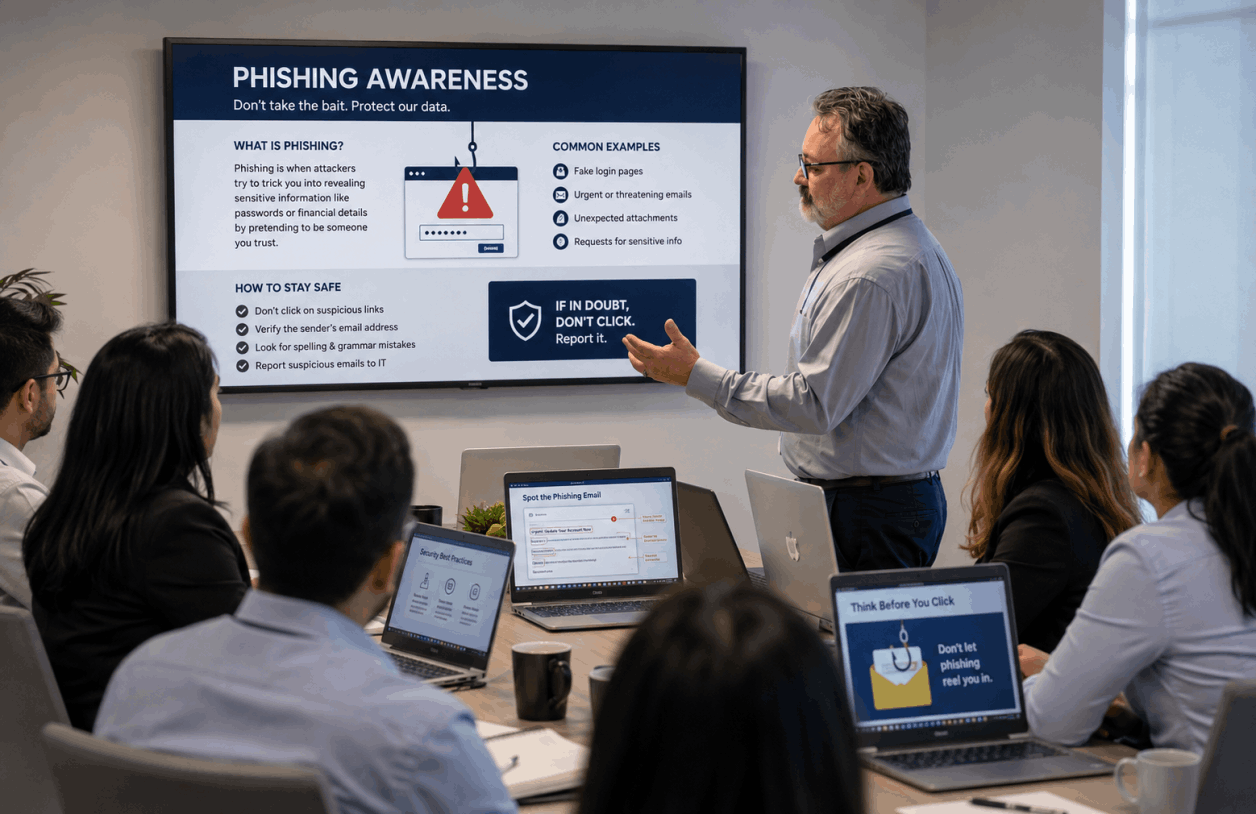
▪ Simulate realistic phishing threats to strengthen the human security layer.
▪ Track cybersecurity awareness training completion.
▪ Identify users at higher risk of phishing and social engineering.
▪ Measure training effectiveness and security-awareness improvement.
▪ Reduce exposure to credential harvesting and malicious email.
▪ Provide awareness dashboards and user-risk trends.
▪ Track program changes to selected PLCs/controllers.
▪ Monitor changes to networks, software, endpoints, configurations, and security controls.
▪ Track changes to users, privileges, groups, and access rights.
▪ Review, authorize, validate, and audit changes.
▪ Detect unauthorized and unmanaged modifications.
▪ Identify configuration and security drift against approved baselines.
▪ Report change-control violations and exceptions.
▪ Identify security conditions that could disrupt critical IT and ICS/OT services.
▪ Track expiring passwords to prevent lockouts and service disruption.
▪ Track expiring and expired user accounts.
▪ Track expiring certificates before service disruption occurs.
▪ Identify critical systems dependent on credentials and certificates.
▪ Prioritize upcoming expirations for timely remediation.
▪ Monitor CPU, memory, storage, and other critical system resources.
▪ Identify capacity constraints before they affect availability.
▪ Analyze resource utilization and capacity trends.
▪ Support proactive capacity planning and infrastructure optimization.
▪ Account for additional resource requirements from patches and upgrades.
▪ Prevent resource exhaustion and potential downtime.
▪ Support reliable workloads and improved uptime.
▪ Inspect, audit, evaluate, track, and validate physical access to critical facilities and ICS/OT zones.
▪ Identify physical access that violates approved permissions.
▪ Identify former employees retaining physical access after leaving.
▪ Validate physical access according to current roles and responsibilities.
▪ Protect critical plants, control rooms, server rooms, and ICS/OT areas.
▪ Maintain evidence of physical access reviews, exceptions, and remediation.
▪ Transform periodic compliance checks into continuous security and control assurance.
▪ Continuously review user, group, privileged, and access-right assignments.
▪ Identify control gaps and compliance exceptions before audit cycles.
▪ Maintain continuously updated, audit-ready evidence.
▪ Track, prioritize, assign, and monitor compliance remediation.
▪ Provide visibility into audit readiness and control effectiveness.
▪ Reduce manual evidence collection, operational burden, and human error.